 Chat with Us

Two-Way Radio Systems for High-Rise Buildings
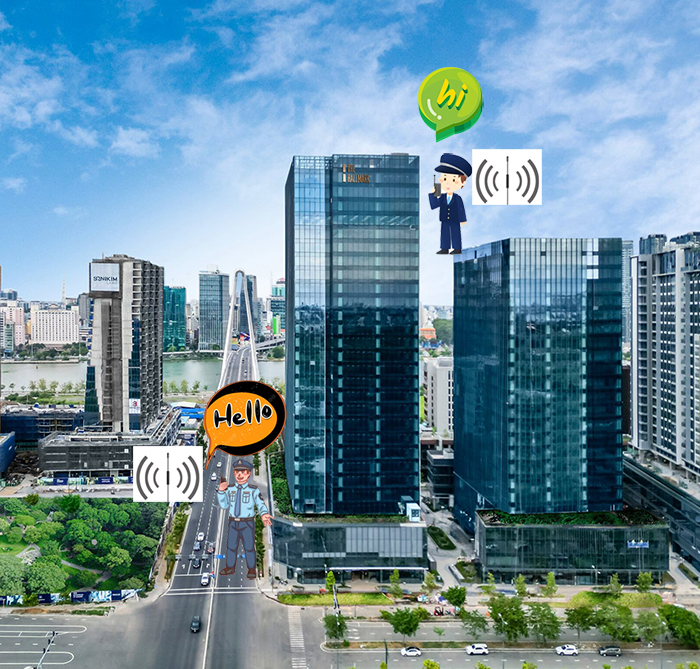
Solutions for using two-way radios in high-rise buildings and basements
1. Challenges when using two-way radios in high-rise buildings
In high-rise buildings or buildings with basements, two-way radio use faces the following challenges:
- Reduced or lost signal: Concrete walls, thermal glass, and metal structures reduce signal transmission.
- Signal dead zones: Parking basements, elevators, or hidden corners…
2. Remedial Solutions
a) Choosing the right two-way radio
- VHF or UHF frequency: UHF frequencies are well suited to environments with many obstructions, such as high-rise buildings.
- High output power: Choose two-way radios with output power of 4–5 W or higher to strengthen signal transmission.
- Digital connectivity support: Select two-way radios capable of connecting through a repeater or Digital Mobile Radio (DMR) technology.
b) Using a repeater system
- For buildings without a basement, or with only one basement, and not too many floors, using handheld two-way radios alone is enough to communicate across different parts of the building. The communication distance is short and there are few obstructions.
- For high-rise buildings with multiple basements, use a repeater to amplify the signal: only 1 signal repeater station and 1 or 2 antennas are needed to cover the entire building; the antennas must be installed at the most suitable locations.
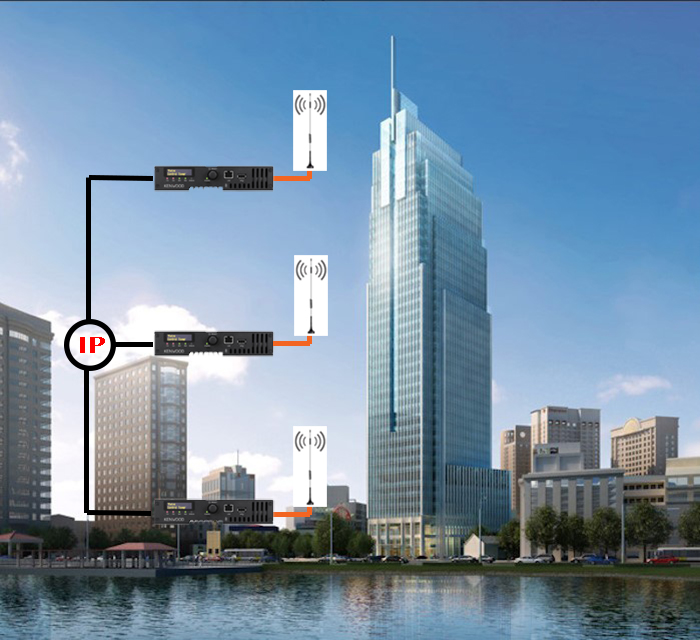
- Inter-floor connectivity: For high-rise buildings that a single repeater cannot fully cover, multiple signal repeater stations linked via IP can provide coverage from the basement to the top floor.
3. System maintenance and inspection
- Periodic checks: Regularly inspect the operation of the two-way radios, repeaters, and supporting equipment.
- Equipment maintenance: Perform periodic maintenance to extend the system’s lifespan.
- Troubleshooting: Promptly detect and fix signal transmission errors.
4. Conclusion
Using two-way radios in high-rise buildings or buildings with basements requires a combination of solutions to ensure a stable signal. Deploying a repeater system, adding supporting equipment, and performing regular maintenance is the optimal approach to improving communication effectiveness in these complex environments.